
When Does a BESS Need Liquid Cooling Instead of Air?
As BESS deployments scale across Renewable Energy Systems, the choice between air and liquid cooling is no longer a minor design detail but a core performance and safety decision. For buyers, engineers, and project leaders evaluating EV Battery platforms, Solid-State Battery roadmaps, and Emerging Technologies, understanding when thermal loads, energy density, and risk profiles exceed air cooling limits is essential to long-term reliability and compliance.
When does air cooling stop being enough for a BESS?
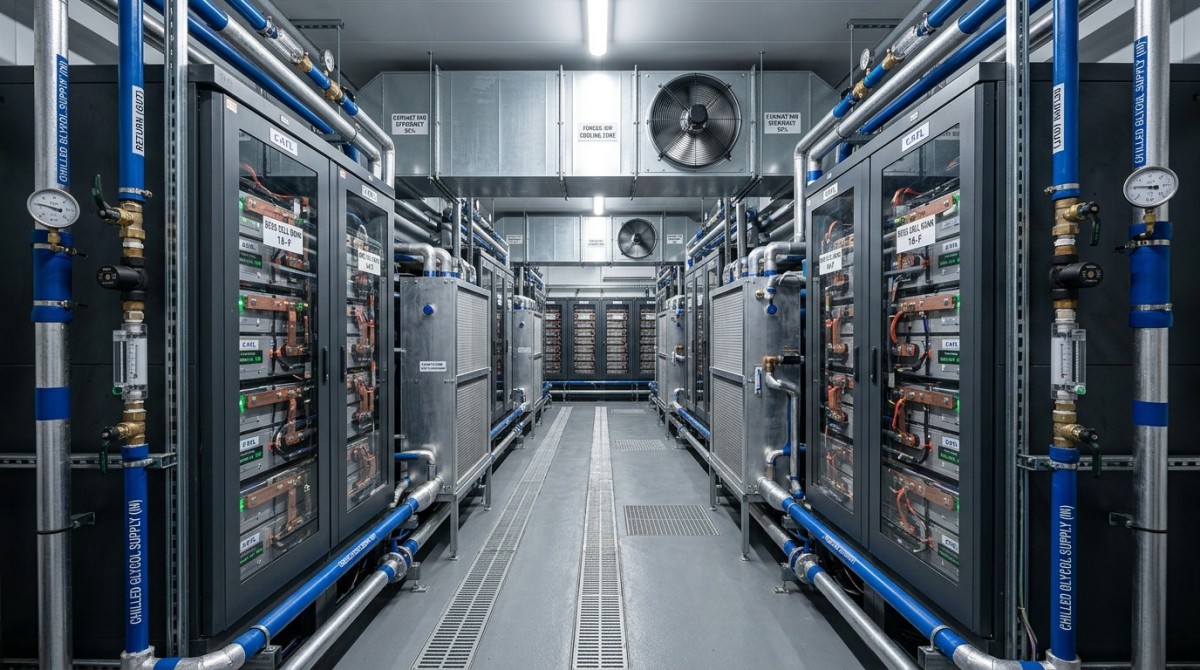
In many battery energy storage system projects, air cooling works well at the entry level. It is simple, familiar to operators, and often easier to maintain in mild climates. But that does not mean it scales well across every project type. Once a BESS moves from small commercial backup or light cycling into utility-scale, high-throughput, or space-constrained deployment, thermal management becomes a system-level design issue rather than an accessory choice.
A practical tipping point appears when heat generation rises faster than airflow can remove it without creating large temperature gradients inside racks. In real procurement reviews, this often happens when projects demand higher energy density, faster charge and discharge rates, tighter enclosure layouts, or operation in ambient temperatures above roughly 35°C. At that stage, air cooling may still function, but it can struggle to maintain temperature uniformity cell-to-cell and rack-to-rack.
For technical evaluators, the key question is not “Can air cooling run this BESS?” but “Can air cooling support the required lifetime, safety margin, and performance consistency over 10–20 years?” That shift matters to procurement teams, EPC contractors, and corporate decision-makers because poor thermal control can affect degradation, usable capacity, maintenance intervals, and compliance planning.
G-GET and G-CET frame this issue within broader industrial integration logic. In large infrastructure and export-oriented projects, thermal design must be benchmarked against not only initial capex, but also international safety expectations, ESG reporting demands, uptime targets, and long-term asset value. A lower-cost cooling method can become the more expensive option if it increases operational uncertainty or forces conservative derating.
Typical signs that liquid cooling should be evaluated
- Ambient conditions regularly exceed 30°C–40°C, or daily temperature swings are large enough to stress thermal stability.
- The project requires frequent cycling, fast ramping, or high C-rate operation for grid balancing, renewable smoothing, or industrial peak shaving.
- Container or cabinet footprint is limited, pushing designers toward higher rack density and reduced airflow paths.
- Safety teams require stronger mitigation of hot spots, thermal runaway propagation risk, and non-uniform aging across modules.
- Project economics depend on maximizing usable energy throughput over a multi-year warranty period rather than minimizing first-cost alone.
These indicators do not automatically eliminate air cooling. They do mean the project should move into structured comparison, with measurable thresholds for temperature rise, thermal uniformity, auxiliary power use, maintenance burden, and integration with fire protection and battery management systems.
Air cooling vs liquid cooling: what changes in real project performance?
For most BESS stakeholders, the real difference lies in control precision. Air cooling removes heat through fans, ducts, and conditioned airflow. Liquid cooling transfers heat more directly through coolant loops, heat exchangers, and thermal interfaces closer to cells or modules. Because liquid has a higher heat transfer capacity than air, it generally manages dense thermal loads more efficiently, especially when charge-discharge cycles are aggressive.
That difference matters in four areas: temperature uniformity, enclosure density, noise and airflow dependence, and response under demanding duty cycles. In practical terms, better thermal uniformity can reduce uneven cell aging. Denser packaging can reduce site footprint. Lower reliance on large-volume airflow can help in dusty, salty, or contaminated environments. More stable temperatures can also improve consistency across seasonal operating windows.
The table below summarizes common project-level differences. These are not universal ratings, because design quality varies by supplier and system architecture, but they reflect the typical decision logic used by technical procurement teams and infrastructure investors.
The most important interpretation is this: liquid cooling is not automatically “better” for every battery energy storage system. It is better when the project needs stronger thermal control than air can provide at an acceptable lifecycle cost. For small and moderate systems in controlled indoor or mild outdoor conditions, air cooling may still be the rational choice.
Where decision-makers often misread the comparison
Mistaking low initial complexity for low total risk
Air cooling often looks easier during bid evaluation because the architecture appears simpler. Yet in dusty ports, coastal sites, industrial zones, or high-temperature renewable plants, airflow-dependent systems can face contamination, fan wear, and uneven cooling. Simplicity at delivery does not always mean simplicity over 5–10 years of operation.
Ignoring enclosure density and throughput targets
A system designed for 2-hour storage with moderate cycling may behave very differently from one dispatched daily for peak shaving, frequency response, or renewable firming. If dispatch patterns intensify after commissioning, an air-cooled design selected only on day-one economics may become restrictive.
Which application scenarios are more likely to require liquid cooling?
Liquid cooling becomes more compelling when BESS projects combine high heat generation with strict uptime and space constraints. This is increasingly common in utility-scale renewable integration, behind-the-meter industrial storage, transport electrification support, and high-cycle grid services. In these environments, the buyer is not just purchasing batteries; the buyer is securing controlled electrochemical performance under variable field conditions.
From a multi-industry perspective, this is why G-GET emphasizes benchmarking the battery system within the broader infrastructure ecosystem. Renewable plants, automated ports, rail power support systems, and advanced industrial campuses all have different thermal exposure, maintenance access, and operational criticality. The correct cooling choice depends on the integration context, not only on battery chemistry.
The following table helps project teams screen likely fit by scenario. It is especially useful during concept design, tender preparation, and technical clarification stages that typically unfold over 2–6 weeks.
A scenario table should never replace engineering validation, but it does shorten early screening. For procurement managers and distributors, it also helps avoid misalignment between front-end pricing expectations and later technical revisions that delay purchase orders or site delivery.
Use-case signals that raise the need for liquid cooling
- Daily cycling windows of 1–3 cycles or more, where thermal accumulation becomes material.
- Projects requiring fast response services in seconds to minutes, causing repeated power swings.
- Sites with constrained maintenance access, where stable internal conditions reduce service interventions.
- Export projects facing broad ambient design ranges such as -20°C to 45°C and multiple compliance checkpoints.
These conditions are common in advanced renewable energy ecosystems and EV battery adjacent infrastructure, where owners care as much about predictable long-term operation as they do about purchase price. That is why thermal management should be reviewed alongside battery chemistry, fire strategy, enclosure design, and EMS dispatch logic.
What should buyers, engineers, and EPC teams check before choosing liquid cooling?
A good procurement process does not ask only whether liquid cooling is needed. It asks whether the proposed liquid cooling architecture is mature, serviceable, and compatible with project constraints. Not all liquid-cooled BESS designs are equal. Buyers should review the full thermal loop, including coolant path, pumps, manifolds, leak detection, maintenance intervals, heat exchanger design, and controls integration with the BMS and site SCADA.
For international projects, the review should include 5 core checkpoints: thermal design intent, enclosure rating, serviceability, safety integration, and certification pathway. This is particularly important when comparing systems from multiple supply regions or when evaluating Chinese export solutions for high-standard global projects. A lower equipment price can be offset by commissioning delays if technical files or compliance documentation are incomplete.
A disciplined selection process usually unfolds in 4 steps over 2–8 weeks, depending on project complexity. First, define the operating profile. Second, verify thermal assumptions under the worst expected ambient conditions. Third, compare O&M implications. Fourth, align the chosen design with warranty, safety, and delivery constraints. This process is especially valuable for project managers balancing capex pressure with long-term reliability commitments.
Practical procurement checklist
- Request the design ambient range, expected internal temperature control band, and any dispatch derating conditions.
- Confirm whether thermal management supports the battery chemistry and target cycle profile without hidden operational restrictions.
- Ask for maintenance scope by quarter and by year, including filters, coolant checks, pumps, valves, and sensor calibration.
- Verify integration with fire detection, fire suppression logic, alarms, and remote diagnostics.
- Review spare parts planning and replacement lead times, especially for exported systems and remote sites.
Standards and compliance questions worth raising early
Although certification scope depends on project geography and system configuration, buyers commonly review alignment with IEC, UL, CE, ISO-related manufacturing practices, and relevant local grid or fire code requirements. Thermal design affects enclosure safety, electrical separation, fault response, and service documentation. Raising these questions at RFQ stage is far easier than redesigning after FAT or site acceptance planning.
This is where G-GET and G-CET add value for decision-makers. Their benchmarking approach helps stakeholders compare not just product brochures, but systemic performance and compliance readiness across battery systems, renewable integration needs, and global project delivery frameworks. For CTOs, procurement strategists, and infrastructure investors, that comparison reduces hidden technical debt.
How do cost, risk, and lifecycle value change between the two options?
Liquid cooling often carries higher upfront system complexity, and in some cases higher initial cost, than air cooling. However, first-cost comparison alone can be misleading. A rational BESS cooling decision should compare at least 6 lifecycle dimensions: equipment cost, auxiliary energy use, maintenance burden, footprint efficiency, degradation control, and operational derating risk. The right answer depends on which cost driver dominates the business case.
For example, if land use, container density, or high daily throughput matters, liquid cooling may improve total project economics even when capex is higher. If the application is low-cycle backup in a controlled environment, air cooling may offer the more economical balance. Procurement teams should also consider whether temperature non-uniformity could reduce usable performance over a 5–15 year asset horizon.
Another overlooked factor is service risk. Air cooling depends heavily on clean airflow paths, fan health, and HVAC effectiveness. Liquid cooling depends on coolant loop integrity, seals, pumps, and monitoring. Neither option is risk-free. The key is choosing the risk profile your site team can actually manage. A coastal utility, mining operator, or automated port may face very different maintenance realities than an indoor commercial facility.
Lifecycle decision summary
A lifecycle table clarifies one central point: the question is not whether liquid cooling costs more. The real question is whether air cooling creates hidden costs through derating, larger footprint, higher thermal variability, or stricter environmental limitations. That distinction is critical for business evaluators and finance teams reviewing return profiles.
FAQ: common BESS cooling questions from procurement and technical teams
Is liquid cooling required for all utility-scale BESS projects?
No. Some utility-scale battery energy storage systems still use air cooling effectively, especially where climate is moderate, container density is conservative, and dispatch intensity is manageable. Liquid cooling becomes more attractive as energy density, cycling frequency, ambient heat, and footprint pressure increase. The correct answer comes from thermal duty analysis, not from project size alone.
What ambient temperature range usually triggers closer review of liquid cooling?
There is no universal threshold, because battery chemistry, enclosure design, and HVAC architecture differ. Still, once projects expect sustained operation in roughly 35°C to 45°C outdoor conditions, especially with daily cycling, liquid cooling often deserves serious consideration. The same applies when high solar loading or restricted ventilation increases internal enclosure heat gain.
Does liquid cooling always reduce maintenance?
Not always. It changes maintenance rather than eliminating it. Air-cooled systems focus more on fans, filters, ducts, and airflow cleanliness. Liquid-cooled systems shift attention toward coolant condition, pumps, seals, leak detection, and loop integrity. The better choice depends on site environment, team capability, and spare parts planning over quarterly and annual maintenance cycles.
What should distributors and resellers ask suppliers before quoting a liquid-cooled BESS?
They should ask for operating profile assumptions, ambient design limits, service intervals, compliance documents, transport configuration, commissioning scope, and support model. It is also wise to confirm whether the quoted system includes the full thermal package or whether some balance-of-plant items are excluded. This prevents later price gaps and protects channel credibility.
Why work with us when evaluating BESS cooling strategy?
For battery energy storage system procurement, the hardest part is rarely finding a supplier. The harder part is deciding which thermal architecture matches the project’s technical duty, compliance pathway, and commercial target. That is where the G-GET and G-CET perspective is useful. We assess BESS decisions through multidisciplinary benchmarking across renewable integration, EV battery evolution, export engineering, safety expectations, and long-term asset performance.
If you are comparing air-cooled and liquid-cooled BESS solutions, we can support parameter confirmation, scenario matching, and document review before you lock a specification. Typical consultation topics include thermal design fit, application suitability, common configuration ranges, delivery cycle expectations of 4–12 weeks for standard programs, certification alignment, and technical-commercial bid clarification.
We also help procurement teams, EPC managers, distributors, and technical evaluators structure the decision around what matters most: operating profile, site environment, density target, safety logic, service model, and lifecycle economics. This reduces the chance of under-specifying the cooling system or overpaying for capacity that the site will never use.
Contact us if you need support with BESS cooling selection, battery system benchmarking, certification requirement review, custom solution evaluation, sample configuration discussion, or quotation communication for international projects. A well-defined thermal strategy at the start can save weeks of redesign and years of avoidable operational compromise.
Search News
Popular Tags
Reserve Your Copy
COMPLIMENTARY INSTITUTIONAL ACCESS
Trusted by procurement leaders at
Get weekly intelligence in your inbox.
No noise. No sponsored content. Pure intelligence.
Recommended News